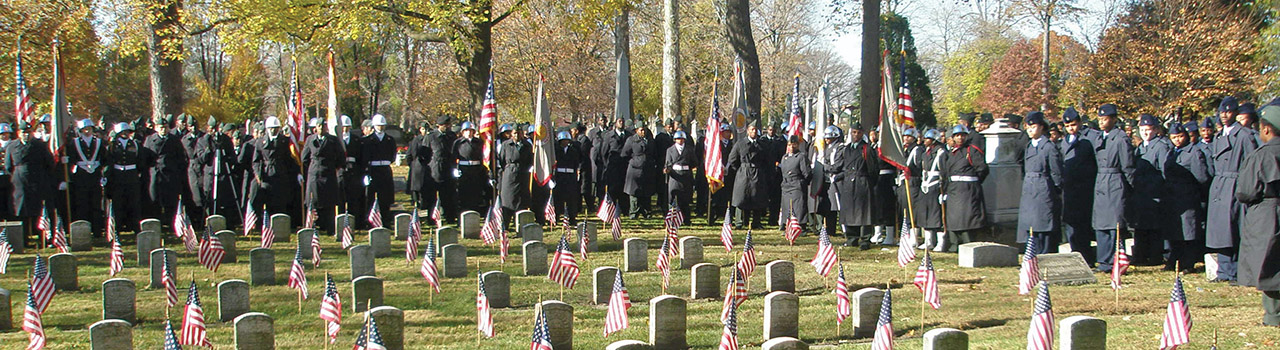
Mr. Newbury was a brilliant
business executive who wandered into the political arena and paid
dearly for the adventure.
A
graduate of Yale University, he began his career working for the
Bay City and Alpena Railroad. In two years’ time, he had achieved
the position of Superintendent but, unfortunately, his father passed
away and his talents were required to take over the many family
businesses. These enterprises included the Presidency of The Detroit
Steel and Spring Company and directorships of many companies from
the telephone company to banks to navigation interests. The automobile
also attracted his attention.
While strolling the streets of New York one afternoon with his brother-in-law,
Henry Joy, they stopped to inspect a Packard parked at the curb.
A fire engine went by, the owner of the Packard ran out, cranked
the car once and was off to the fire. The two men were so impressed
with this performance that they decided to pool their funds to provide
the capital to bring the Packard Motor Company to Detroit. It was
located at the Boulevard and Mt. Elliott. Albert Kahn was the architect
for the company. Out of the complex of buildings came a new type
of industrial architecture based on reinforced concrete.
Along with his business interests, Mr. Newberry built a successful
naval career. In 1893, he organized the Michigan State Naval Brigade.
During the Spanish-American War of 1898, he was commissioned a lieutenant
serving on the cruiser, Yosemite, off the Cuban coast. He also served
as Assistant Secretary of the Navy. During World War I, Mr. Newberry
was a Lieutenant Commander and an Assistant to the Commandant of
the New York City 3rd Naval District until 1919. Most of his work
in the Navy was directed toward improving the administrative machinery
and it drew the attention of some politicians from the Republican
Party of Michigan which was desperate to gain Republican seats in
the Senate.
Some
of the men wrote to Mr. Newberry in New York asking him to consider
becoming a candidate in the 1918 primary. He responded by pointing
out the fact that he was not a politician and that he was too busy
with his duties at the time but would be happy to serve in whatever
capacity they would choose. In the meantime, Henry Ford, with the
blessing of Woodrow Wilson, decided to throw his hat into the ring.
Due to the Michigan Open Primary Law, he was able to run for the
nomination of both parties. Mr. Ford was well known for his anti-war
sentiments. One of his well-publicized projects was his “Peace
Ship”. He had built the ship and transported a group of people
across the ocean with the specified purpose of “getting the
boys out of the trenches by Christmas”.
Mr. Newberry, on the other hand, had a recognition problem with
the voters. His supporters felt compelled to run ads and print a
great deal of literature in order to define his candidacy and explain
his positions.
Mr. Newberry won the nomination of the Republicans while Mr. Ford
was the Democratic Nominee. Mr. Newberry won in November by a narrow
margin. There was widespread speculation about the amount of money
spent by the “Newberry Campaign”. Mr. Ford called for
a recount. Many newspaper editors suggested Mr. Newberry and his
“campaign” had committed other improprieties. All contributions
were documented to have been provided by friends and none of Mr.
Newberry’s own funds had been used. Many Congressional hearings
were held and adjourned without any conclusions being drawn. A Grand
Jury was convened in New York State and their decision was to dismiss
all allegations against Mr. Newberry.
Mr. Ford continued to insist that the Senate needed to bring charges
against Mr. Newberry. Finally, in 1920, Newberry was tried and convicted
for violating the Federal Corrupt Practices Act. The penalties included
a $10,000 fine and a two-year prison sentence. Since he had nothing
to do with the campaign practices, he appealed through the courts
and stayed out of jail. In a May, 1921 decision, the Supreme Court
reversed his conviction on the grounds that the law used to convict
him was unconstitutional. Congress had no power to regulate primary
elections. At the same time, a Congressional Committee exonerated
him. While the appeals were taking place, Mr. Newberry was given
a provisional seat in the Senate. During this time, he did sign
a resolution opposing the League of Nations. Mr. Newberry resigned
from the Senate in order “to save the party any further embarrassment”.
This case led Congress to enact a Federal Corrupt Practices Act
in 1925 but it has proven ineffective in containing congressional
campaign financial irregularities.